How to Start a Meditation Practice at Home: Don’t Overthink It
Just Begin
For some of us there are moments in life when we begin to feel a quiet call.
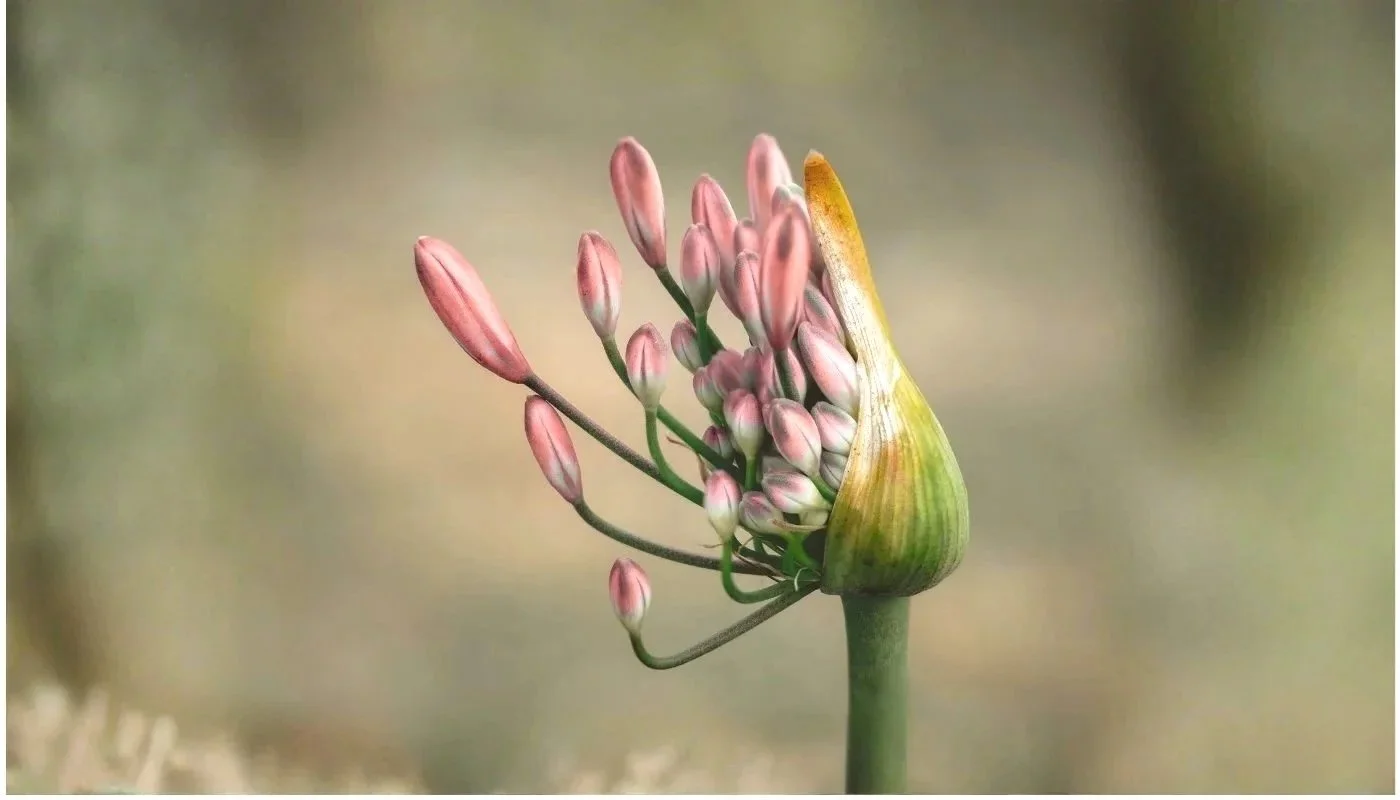
Often it doesn’t arrive loudly, nor does it insist. It’s more like an impulse, a subtle knowing that somewhere within us there is a deeper place waiting to be remembered.
For some people this whisper arrives through music, the birth of a child, or time spent in nature. For others it may arise during a difficult season of life when we feel overwhelmed or restless and it is as if the heart is longing for stillness.
For me, that quiet call arrived during an unexpected conversation on a bench with a friend I deeply admired.
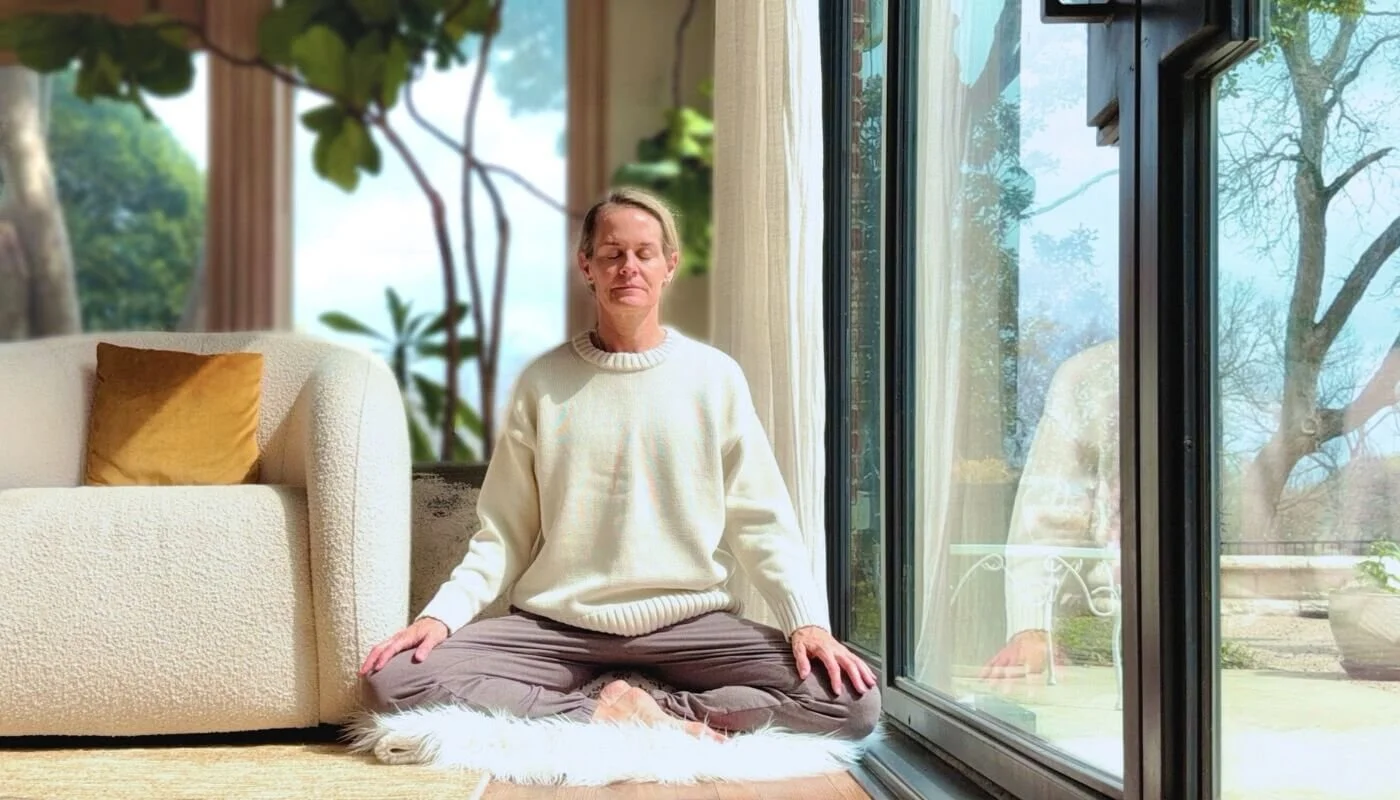
Meditation has been part of my daily life for more than twenty years. My path into contemplative practice began through yoga in the early 2000s and has continued to deepen through silent meditation retreats and many years of study with the spiritual teacherAdyashanti since 2014. What I share here comes from lived experience rather than theory.
The Moment Meditation Entered My Life
I remember the exact moment meditation entered my life.
I was practicing handstands with a dear friend named Carlos. He was an accomplished hand balancer, but what stood out even more than his physical skill was the calm presence that seemed to flow from him. There was something about him that felt ancient, steady, and deeply peaceful.
I could feel it, but I could not quite understand it.
Eventually I said to him, “I think what you have is meditation. Will you teach me how to meditate?”
At first he resisted. Over time I asked again and again.
One day we were sitting together outside on a bench and I asked him once more.
He paused, looked carefully into my eyes, and said something that stayed with me. “Your life is going to change. And sometimes it may not change in the way you imagine it will. Are you prepared for that?”
With complete sincerity and without hesitation I said, “Yes.”
And in many ways, he was absolutely right.
The Fire That Softened
Before meditation there was a burning fire inside my belly, what I would call an insatiable need to prove myself and a constant striving.
Meditation did not extinguish that fire, but slowly something softened.
Not completely gone, but softened enough that I could begin to recognize the quiet influence of the ego, the part of us that believes we must constantly prove or earn our worth.
And as that part softened, there was also a bit of grief. A mourning of the identity that had lived inside that striving for so long. Transformation is rarely comfortable. Just think of the tiniest seed pushing through the soil. But alongside that process something else began to emerge, a deeper sense of belonging, a quiet groundedness that I briefly remembered experiencing as a young child.
We Overcomplicate Meditation
Over the years one thing has become very clear to me.
We tend to overcomplicate life. And because meditation is intertwined with life itself, we often end up overcomplicating meditation too. Meditation does not require elaborate rituals or perfect conditions. At its heart meditation begins very simply.
We sit down.
We become aware.
And we begin.
Beginning a Meditation Practice
If you are curious about meditation, the simplest way to begin is to make a small commitment to yourself.
Choose a time of day when you can sit quietly for a few minutes. Sit comfortably in a chair or on the floor with the spine upright and relaxed. Let the shoulders soften. Let the jaw unclench.
Begin with three to five minutes.
Simply notice the breath moving in and out of the body. Let it remain natural.
If the mind wanders, and it will, gently invite your attention to rest upon the breath again. You may do this many times during a single meditation.
That is the practice.
Modern mindfulness research, including the work of Jon Kabat Zinn, has shown that even brief moments of meditation can support the nervous system and reduce stress.
A Place to Sit
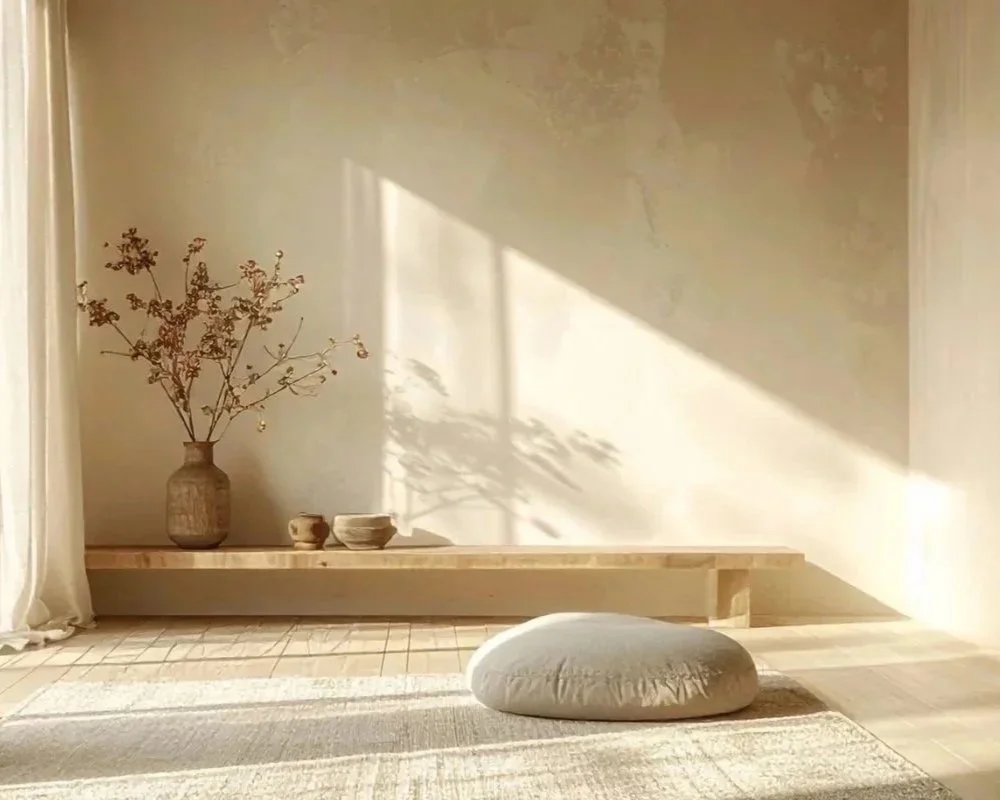
In the beginning it can be helpful to have a small place where you regularly sit. Some people enjoy creating a meditation corner in their home, perhaps a cushion, a candle, a plant, or a chair near a window. It can even be fun to scroll through Pinterest and imagine creating beautiful meditation spaces filled with light and quiet.
But meditation does not require a certain space.
A cushion or chair is enough. And eventually even that becomes optional. Because over time we discover that the quiet place we were searching for outside ourselves is something we carry within.
Giving the Mind a Gentle Place to Rest
It can be helpful, especially when beginning, to offer the mind a gentle place to rest.
You might follow the natural rhythm of the breath.
You might observe the steady flame of a candle.
These simple anchors allow the mind to settle while awareness begins to deepen.
The thoughts will still come. That is simply the nature of the mind.
Many meditation guides reference the blue sky as our truest nature and the clouds as the mind.
During meditation we begin to notice thoughts the way we might watch clouds moving across the sky.
The clouds pass.
But the vast blue sky remains.
Meditation invites us to rest in that deeper sky.
Questions People Often Ask When Beginning
Over the years many people have asked me lots of questions about meditation. Curiosity is often there, but so is uncertainty. That is completely natural. I wanted to share a few of the questions I hear most often.
What are you doing when you just sit there?
I try to embody the deepest truth I have come upon and allow the person asking the question to feel rather than hear any explanations. If I sense that silence is not being received, I invite them to simply try the practice for a period of time, perhaps twenty one days, and see what they notice.
How long should a beginner meditate?
In the beginning, this depends upon the person’s disposition. If you tend to be high strung and full of energy, three minutes might feel like quite a challenge in the beginning.
When I first began meditating I started with three minutes. I stayed there until it felt comfortable, then slowly moved to five minutes, then eight, ten, and so on.
There is no need to rush.
Even a few moments of sincere presence can support the nervous system and bring a sense of calm.
What should I focus on?
There are many meditation techniques. I often invite people to begin with one simple approach, such as following the breath, and remain with it for a period of time.
When curiosity naturally arises, you can explore other techniques.
My teacher Adyashanti often refers to what he calls “True Meditation,” which he describes as an effortless state of being rather than a technique to be mastered.
This can feel like a tall order in the beginning. I humbly invite you take it slowly and follow your own heart.
Here are a few other ways you might explore meditation.
You might repeat a mantra.
You might observe a candle flame.
Some people also enjoy guided meditations. Years ago I participated in a series offered by Deepak Chopra and Oprah Winfrey, and at the time that structure felt very supportive.
The important thing is simply to find something that resonates with you.
What if I fall out of the habit?
That happens to almost everyone. Life becomes busy and the rhythm can slip away. If that happens, simply begin again. Meditation is always waiting for us. Jesus even taught us in the Bible to begin again.
How will I know if meditation is working?
The changes are often subtle. You may notice moments of less reactivity. You may recognize the ego more easily, not with judgment but with awareness. Some people feel more grounded or rested. Others begin to experience a quiet peacefulness that comes and goes. Meditation rarely brings about drastic changes overnight.
But slowly, quietly, something begins to shift.
Does meditation only happen while sitting?
Over time meditation naturally begins to extend into everyday life.
Washing dishes.
Folding laundry.
Preparing a meal.
Walking outside.
The more we practice sitting quietly, the more we begin to carry that same awareness into ordinary moments. Meditation slowly becomes less about an activity and more about how we embody the deeper knowings and experiences we have come upon.
An Invitation
If meditation is calling to you, begin simply.
Find a quiet place.
Sit comfortably.
Allow the breath to move naturally.
Nothing needs to be achieved.
Nothing needs to be forced.
If the mind wanders, gently invite it to rest upon the breath again.
Over time you may discover that those few quiet minutes begin to change the way you move through your entire day. And perhaps slowly you will begin to recognize the deeper stillness that has always been there. Waiting patiently to be remembered. If meditation is calling to you, there is no need to overthink it.
Just begin.
About the Author

Leslie Storms is a yoga teacher, meditation practitioner, and holistic registered nurse with more than two decades of experience in contemplative practice. She holds a master’s degree and has maintained a daily meditation practice for over fifteen years. She has studied extensively with the spiritual teacher Adyashanti and has completed silent meditation retreats. Her work explores yoga, meditation, nervous system awareness, and contemplative living.