Can Boundaries Be a Sacred Practice?
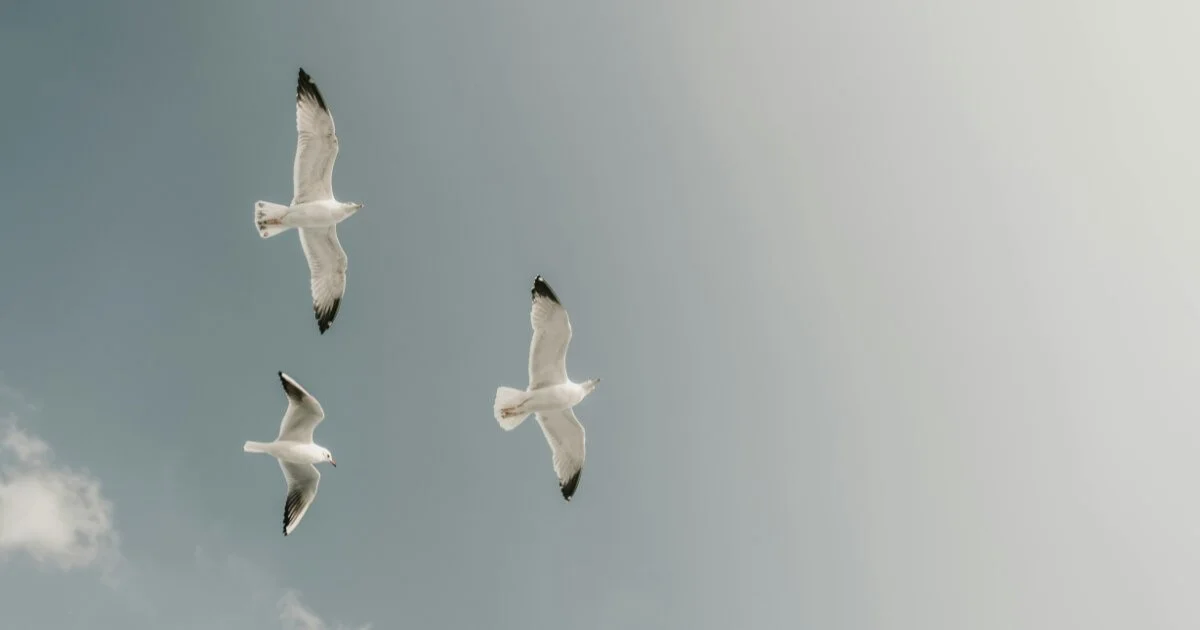
A reflection on the practice of discernment
Perhaps no one has ever told you that you have porous boundaries. Maybe you've been described as thoughtful, caring, intuitive, generous… the person who somehow seems to know exactly what everyone else’s needs are.
That was me.
For much of this life, if there was any tension in a room, I felt it almost immediately. And once it had been sensed, I believed it was somehow my responsibility to at least try to smooth it over or lessen it.
I grew up with a mother who could be incredibly direct, often without realizing how her words might land with another person. I remember countless times feeling the reaction of the person on the receiving end and immediately wanting to soften what I believed had just transpired. I might explain, scold my mom, or try anything to lessen the discomfort—and mind you, this was my discomfort. I didn’t know it then, but I was already exhausting myself trying to manage the emotional atmosphere around me. No one had ever asked me to do this. In fact, my attempts were often unwelcome.
I simply felt the discomfort and assumed it was mine to resolve.
I became an expert at anticipating what I assumed other people might need. Often, they didn't even have to tell me. I believed I could intuit it, and many times perhaps I could.
But being able to sense what another person needs in no way makes it ours to tend.
It took me a very long time to understand that.
When Caring Becomes Self-Forsaking
Somewhere along the way, I had learned that love was something we earned. I became accomplished at morphing into whatever everyone needed. But it went deeper than that. It was often what I thought they needed, and that didn't necessarily make it so.
I became accustomed to placing another person's needs ahead of my own because maintaining the relationship, restoring the peace, or managing someone else's discomfort (especially my own) seemed more important than whatever was happening inside me. I didn't recognize this as forsaking myself. I thought I was helping to maintain peace and ultimately being a loving person.
There is a difference between caring deeply for another person and continually leaving ourselves in the name of caring for them. When being helpful, compassionate, or highly attuned to others becomes part of our habitual patterning and even part of how we understand ourselves, that distinction can be incredibly difficult to see. We may call it love or responsibility. We may even believe this is who we are.
I know the cost of such confusion.
Weak boundaries have cost me my own peace time and again. They have affected relationships, marriages, and nearly every facet of life. There were times when I wondered why I was so profoundly unhappy without understanding how frequently I was stepping away from myself in order to remain devoted to what I believed someone else wanted or needed.
By 2017, I reached a point when I knew this way of living was no longer sustainable. It was a dark, lonely, and frightening period of life. There wasn't a single insight that suddenly changed everything. What followed was much slower: meditation, yoga, embodiment practices, silent retreats, and a willingness to listen to what was actually happening inside.
Learning to Stay
I didn't learn boundaries by becoming harder or simply learning better ways to say no. Much of the change came from learning how to let myself stay with discomfort.
Meditation teaches us to sit with discomfort without immediately trying to make it disappear, while yoga and embodiment practices help us learn to notice what’s happening inside before taking action.
And then there’s the breath. It gives us a place to rest and return to when we feel that familiar urgency to fix, soothe, or make things okay.
Svādhyāya (the yogic practice of self-study) can help us begin to understand why such urgency arises in the first place. For me, part of svādhyāya has become the willingness to notice that vulnerable moment when I begin to abandon myself.
Someone I love is struggling. Someone is disappointed. There is tension in a relationship. Something feels unsettled. And before I consciously decide what to do, I can feel that old impulse to move toward it and alleviate the pain.
Now I try to notice these moments.
Why am I reaching forward?
Has anyone actually asked for my support?
Is this truly mine to tend?
And perhaps the most revealing question:
What am I hoping to avoid by intervening?
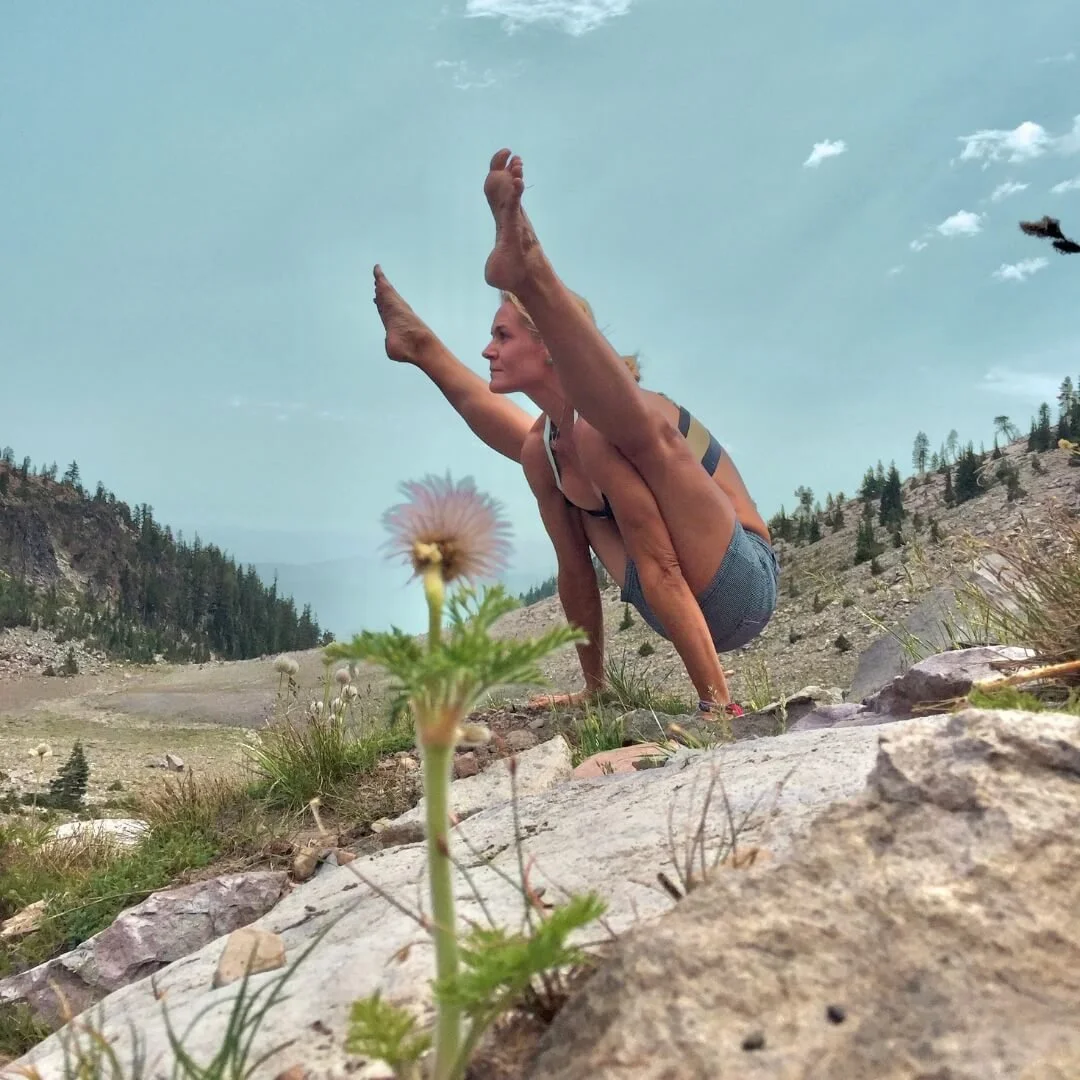
Mount Shasta on retreat with Tim Miller
Sometimes what looks like helping another person may actually be rooted in our own difficulty tolerating the discomfort of witnessing their struggle. Not every uncomfortable feeling needs to be soothed or changed. Sometimes discomfort is simply part of life, like the little seedling that must push through the soil before it ever reaches the light.𓂃܀𓈒❀
When I feel the impulse to rescue or change, I try and pause and this gives enough space to listen.
This space has allowed discernment to grow and flourish.
I wish I could give someone a simple method for knowing what is theirs to attend to and what isn't.
I can't. For me, it has become an inner knowing developed through years of practice and living through the consequences of my own choices. Sometimes the answer feels very clear: help. Other times, I sense that I’m being asked to remain where I am, to love the person, perhaps even sit beside them in their struggle, without taking it on or trying to carry it for them.
And when I still struggle to find clarity, there is a question I sometimes explore:
“What if this were happening to my daughter? What would I want for her?”
Bear in mind, I don't have a daughter, but perhaps that is part of why the question works so well for me. I imagine someone I love deeply whose life I’m able to see without all of my own rationalizations and fears. Would I want her continually placing another person's needs before her own? Would I ask her to sacrifice her peace simply to maintain a relationship? Usually, I can see much more clearly what I value and what feels true. The practice is then to offer myself that same clarity.
I No Longer Wish to Steal Another Person's Path
There’s another understanding that has profoundly changed the way I relate to the people I love.
I no longer want to steal another person's path.
I try to see the people I love through the lens that they have within them what they need to move through their own individual lessons and struggles. This doesn't mean I'm unwilling to share what I've learned along the way, especially when asked.
In yoga philosophy, asteya is often interpreted as non-stealing. It invites us to examine the ways we may take what does not belong to us. I’ve come to see that this can include another person’s path, their lessons, and even the struggle that may be theirs to move through.
Can our helping sometimes take something from another person? Can we become so determined to spare someone from difficulty that we interfere with the very experiences through which existence is trying to shape them?
I may see someone I love making the same choice over and over again. I may recognize the pattern and, when it feels appropriate, share what I see or offer another possibility. But if that person isn't ready to make a change, isn't able to make it, or simply chooses another way, I’ve learned to let go.
This was once extraordinarily difficult for me. There are obstacles, losses, mistakes, and periods of suffering that have molded me into the person I am today. I would never have voluntarily chosen many of them, yet I can see what they each asked me to learn. Why would I assume that I should remove difficult experience from someone else's path? There is humility in recognizing that we may not always know what is best for others or for their evolution.
Sometimes love asks us to support. Sometimes love asks us to simply be.
Knowing the difference is discernment.
The Boundary as a Sacred Threshold
I don't see a boundary as a line or a wall. I prefer to conceptualize it as a threshold. A threshold gives us a place to pause and remember that while our lives are deeply interconnected, they are not interchangeable. Each of us has our own inner life, responsibilities, lessons, and path to walk.
We can care deeply about what happens to another while honoring what is happening within ourselves. We can offer what is genuinely ours to give without assuming responsibility for everything another person experiences. And we can allow them the dignity and agency of meeting their own lives.
For me, boundaries have become part of a deeper spiritual practice.
What exactly is mine? What belongs to another? When am I being asked to serve? And when am I being asked to simply be a loving witness?
Perhaps it is something like tending a seed. We nourish the soil and offer water when it is ours to offer, but we cannot pull at the stem or force open the petals. At some point, we have to trust the life within it to know something about its own unfolding.
Maybe the deeper exploration has never been about cultivating better boundaries.
What if we became curious about all the ways we may be forsaking or abandoning ourselves?
I spent many years believing that loving well meant sensing what everyone else needed and doing my best to offer it. I understand love differently now.
My life is also a life I have been entrusted to care for.
And honoring that life first, while keeping my heart open to the lives around me, may be one of the most sacred thresholds I can try and keep.